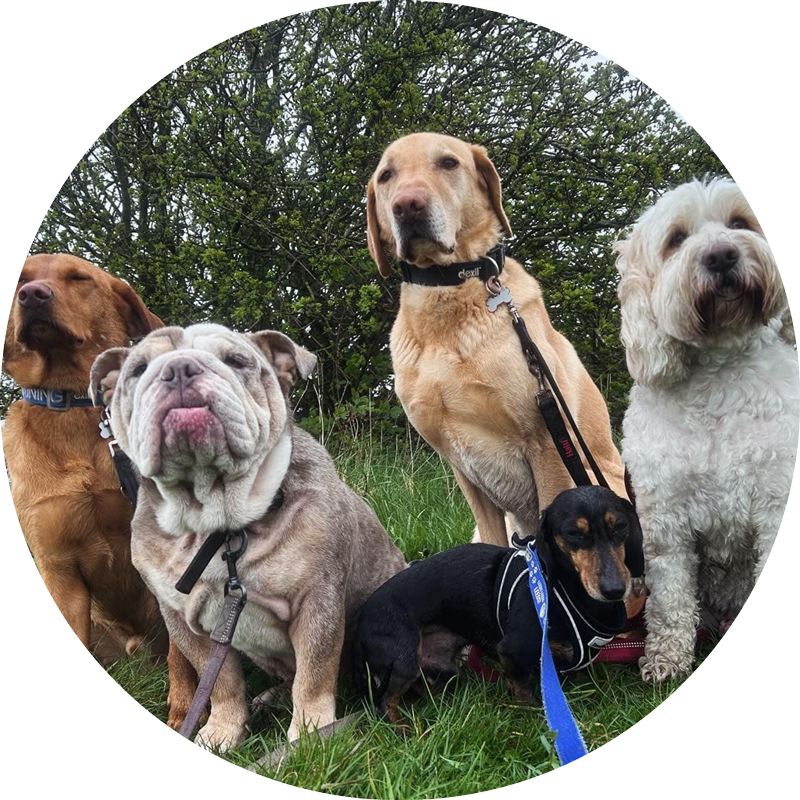
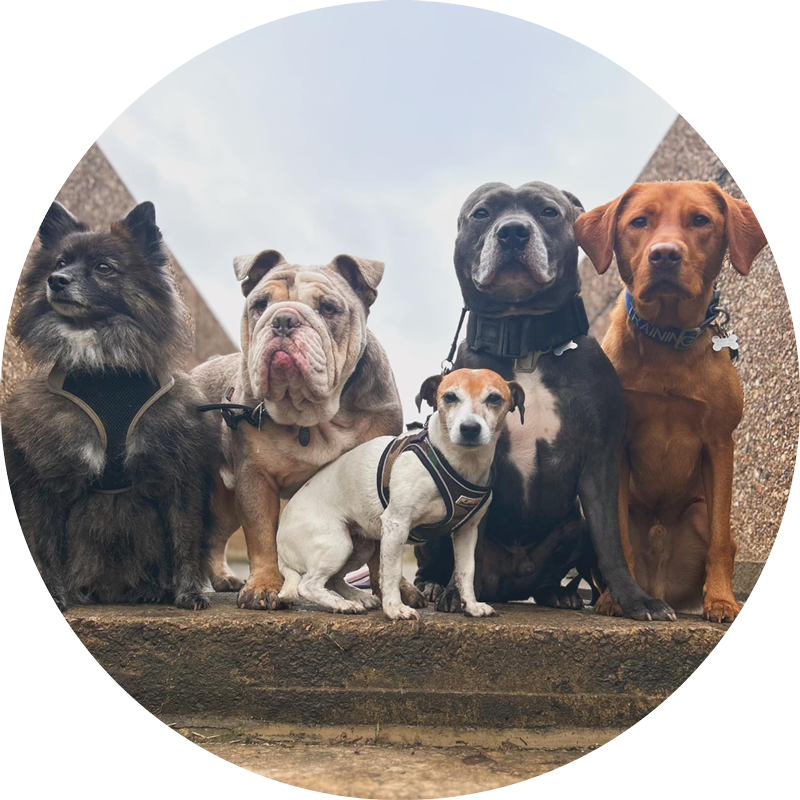
DogSwot originally started 11years ago as a dog walking and small home daycare business, and I still run daily group walks as part of the business, with many of my OG dogs still attending regularly.
To the outside, I’m sure many see the walking as a different entity to the behaviour modification element, but they actually complement each other perfectly and many don’t see how vital understanding dog behaviour is to managing group dog walks.
While social media portrays care free, fun outings, professional group walks require careful planning, ongoing training, and an understanding of canine behaviour. The difference between a chaotic walk and a safe, enriching experience often comes down to understanding and modifying behaviour.
Every Dog Brings Their Own Personality
No two dogs are the same. Some are naturally confident and social, while others may be nervous, overexcited, or unsure around unfamiliar dogs. Even well-behaved dogs can develop unwanted habits if they are placed in an unsuitable group or if inappropriate behaviour goes unchecked.
Professional dog walkers must understand each dog’s temperament, communication style, and individual needs before introducing them into a group environment. This helps create balanced groups where dogs feel comfortable, confident, and able to enjoy their walk.
Preventing Problems Before They Start
Behaviour modification isn’t just about correcting unwanted behaviours—it’s about preventing them from becoming established in the first place.
During group walks, dogs are constantly learning from one another. Excitable behaviours such as excessive barking, jumping, chasing, or poor recall can quickly spread if they are not managed appropriately. Equally, anxious or reactive dogs may become overwhelmed if they are pushed beyond their comfort zone.
Building Reliable Recall
One of the most important skills for any group-walk dog is a dependable recall.
Reliable recall isn’t simply about obedience—it’s about safety. Whether avoiding wildlife, cyclists, livestock, or other members of the public, a dog that responds immediately when called is far less likely to find themselves in dangerous situations.
Teaching Calm Social Skills
Many people assume that dogs naturally know how to interact with one another. In reality, social skills are learned throughout a dog’s life.
Professional group walks provide excellent opportunities for dogs to practise polite greetings, appropriate play, and respectful communication. However, these interactions should always be supervised carefully.
Reading Canine Body Language
Understanding body language is one of the most valuable skills a professional dog walker can possess.
Dogs communicate constantly through posture, facial expressions, tail movement, ear position, and subtle behavioural changes. Early signs of stress, discomfort, or overstimulation are often missed by inexperienced handlers but can provide valuable opportunities to intervene before a problem develops.
Recognising when a dog needs more space, encouragement, or a change of activity helps create a calm and positive group environment where every dog can thrive.
Safe Group Dynamics Matter
Not every dog is suited to every group.
A professional walker should carefully consider age, size, energy levels, confidence, play style, and individual personalities when creating walking groups. Matching compatible dogs reduces stress and encourages positive interactions.
Sometimes behaviour modification involves gradually building confidence through smaller groups or one-to-one sessions before introducing a dog into larger social walks.
The Value of Professional Knowledge
Behaviour modification is an ongoing process rather than a one-time fix. Dogs continue learning throughout their lives, and every walk presents new opportunities to reinforce positive habits.
Professional group dog walking combines exercise, enrichment, socialisation, and structured training to provide dogs with experiences that support both their physical and emotional wellbeing. When behaviour and training are prioritised, group walks become safer, more enjoyable, and more rewarding for everyone involved.
A well-managed group walk is about far more than covering miles—it is about helping dogs develop confidence, self-control, good social skills, and lasting positive behaviours that benefit them every day, both on and off the lead.