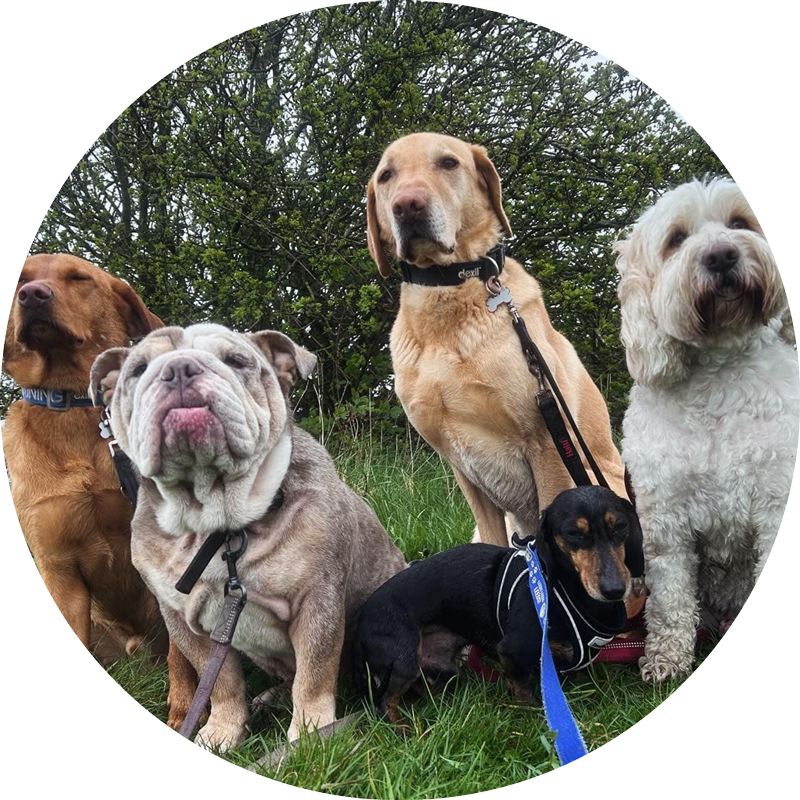
After recently returning from one of the best dog friendly weekends, we’ve ever been on, the number of messages from customers in desperate need of somewhere similar was huge.
As an owner of a previously reactive dog, the list of what constitutes ‘dog friendly’ has always been more extensive for me than most owners. I’ve learned to accept I need to zoom in on garden photos, house lay outs, the size of the site, how busy it could be… I’ve even messaged hosts to ask them not to enter the garden unannounced on arrival.
Many moons ago I probably felt like I was in the minority but, after working with behaviour clients with similar issues over the years, it astounds me so many ‘dog friendly’ breaks are still quite the opposite.
Let’s be honest: putting a dog bowl in the kitchen and calling your holiday cottage “dog friendly” doesn’t make it dog friendly.
Dogs don’t read the listing. They don’t care that you’ve provided a welcome biscuit or painted a paw print on the sign outside. What matters is whether the cottage actually works for a dog — and, more importantly, whether it makes life easier for the people who have brought one.
A dog-friendly cottage starts at the front door
The first question is simple: can I get my dog safely in and out?
A secure garden is worth far more than a decorative courtyard with a waist-high wall and a gate that doesn’t quite shut.
Owners want somewhere their dog can have a proper sniff, stretch their legs and go to the toilet without being watched like a hawk every second. Fencing needs to be secure, gates need to latch properly, and there shouldn’t be obvious escape routes underneath or through them.
And if the garden isn’t secure, just say so.
If the outdoor space is surrounded by stimulus, livestock, other dogs running the peripheral or children putting their hands through the gaps then just state it is a busy road/ area/ site.
Honesty is much more useful than a photograph that carefully avoids showing the gap under the gate or the adjacent neighbouring gardens.
Floors matter more than fluffy cushions
A genuinely dog-friendly cottage accepts that dogs are messy.
They bring mud in. They shed hair. They occasionally have an accident. They drink water and then shake themselves enthusiastically five seconds later.
That doesn’t mean the place needs to feel like a kennel. It means the owners should have thought about how real dogs behave.
Hard-wearing floors around entrances are a bonus. A boot room, utility area or somewhere to dry a wet dog is even better. Throws that can be washed are useful, or ask owners to bring them. Furniture that looks terrified of a Labrador is not.
Guests should not feel that one muddy paw print is going to result in a £200 cleaning charge. People who have dogs still have tidy homes and have the ability to clean up after their dogs, and should not be made to feel like their accommodation should be sub standard due to bringing a dog. They pay extra for the dog friendly space and this should be respected.
The best dog-friendly cottages understand muddy walks
A cottage can be beautiful, comfortable and wonderfully decorated, but if the nearest decent dog walk involves a mile along a busy road, it isn’t especially dog friendly.
Good information makes a huge difference.
Where is the nearest off-road walk? Is there a footpath from the cottage? Can you walk somewhere without getting into the car? Is there a pub that welcomes dogs? Where is the nearest vet?
Guests don’t necessarily need a ten-page welcome pack. They need useful, accurate information from someone who actually knows the area, and who knows dogs.
A simple map and a few honest recommendations can be worth more than another basket of toiletries.
Dog bowls are nice. A towel is better.
The little touches count, but they need to be the right little touches.
A couple of sturdy bowls? Excellent.
A dog towel by the door? Brilliant.
Some treats? Lovely.
A ridiculous amount of branded dog merchandise while there’s nowhere to put a wet lead? Not so much.
The best dog-friendly places think about what owners actually need when they arrive after a long journey: somewhere for the dog to drink, somewhere to put its food, somewhere to dry it, and somewhere sensible to store leads and muddy boots.
That’s hospitality.
Don’t pretend every dog is the same
“Dogs welcome” should not be code for “one small, well-behaved dog considered acceptable.”
If there are restrictions, explain them clearly.
How many dogs can stay? Are large dogs welcome? Are there additional charges? Can dogs go on the furniture? Are there rooms they can’t access? Is the garden genuinely secure? Is it suitable for reactive dogs?
From experience, most reactive dogs are actually very well behaved within a domestic environment. Owners should not feel that raising that their dog is reactive means that it is a ‘naughty’ dog, it just needs to know there is space away from it’s triggers.
Nobody enjoys discovering the rules after booking.
In the same breath, cottage/ lodge owners shouldn’t be afraid to have reasonable rules. Dog friendly does not mean dog owners get to ignore the property.
It means both sides understand the arrangement.
What about the sofa?
This is where things get interesting.
Some owners will happily let their dog sleep on the sofa. Others absolutely won’t.
There isn’t one correct answer.
What matters is being clear. If furniture is off limits, say so. If dogs are allowed on certain furniture, provide washable throws. If the cottage has expensive antique upholstery, perhaps don’t advertise it as the perfect destination for three muddy spaniels.
The same goes for beds.
Clear expectations prevent arguments.
A dog-friendly cottage should feel relaxed
Perhaps the biggest test is this:
Can I relax when I arrive with my dog?
If the answer is yes, you’ve got it right.
The guest shouldn’t spend the entire weekend worrying about whether the dog has touched something, whether muddy paws are forbidden, whether the garden gate is secure or whether they’ll be charged for breathing near the carpet.
Of course guests should clean up after their dogs. Of course dogs should be supervised and well behaved. Of course owners need to respect the property.
But a truly dog-friendly cottage starts from the assumption that dogs are welcome — not merely TOLERATED.
The honest definition of dog friendly
A dog-friendly holiday cottage isn’t one with a paw-print sticker on the website.
It’s somewhere that has thought about the whole experience of travelling with a dog.
It’s a secure garden.
It’s practical floors.
It’s somewhere to dry a wet dog.
It’s good walks nearby.
It’s straightforward rules.
It’s useful local information.
It’s a bowl and a towel rather than gimmicks.
And, above all, it’s somewhere where the humans can put their feet up while the dog settles down after a day of exploring.
Because that’s what people are really booking.
Not just a cottage that allows dogs.
A cottage where dogs genuinely belong.