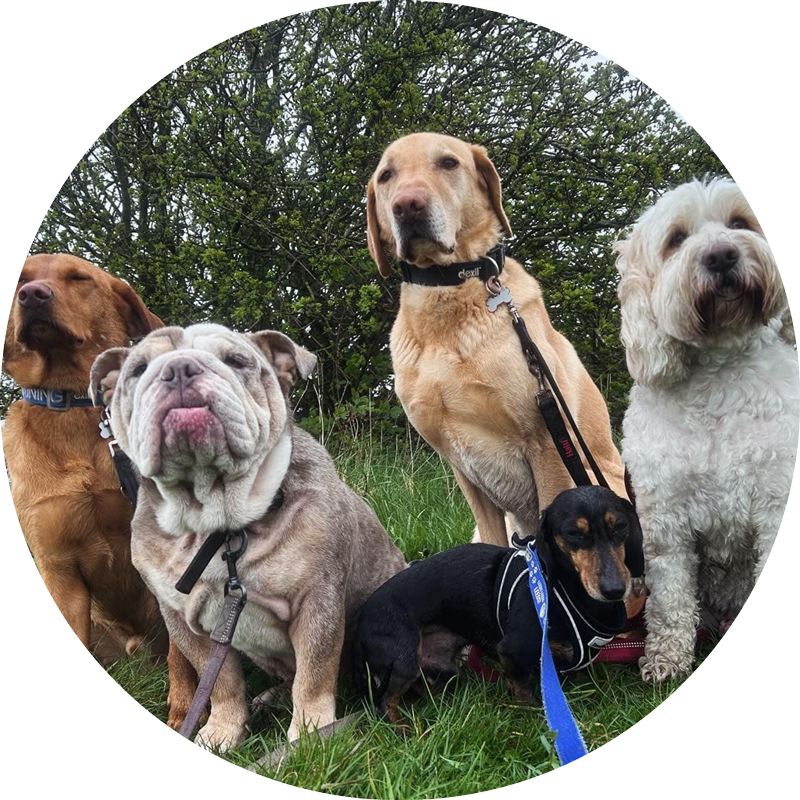
When people talk about the love of a dog, they often describe it as pure, unconditional, and even magical. I understand the temptation to romanticise it, we all love how our dog greets us at the door like we are the most amazing thing on the planet.
But from a behavioural science perspective, canine love is not magic. It is observable, measurable, and deeply rooted in learning, attachment, and biology
Love as Attachment
In behavioural science, rather than ‘love’, we talk about attachment bonds.
Research has shown that dogs form secure attachments to their humans in ways similar to human infants with caregivers. In structured attachment tests, dogs show distress when their person leaves and comfort-seeking behaviour when they return. They use their human as a “secure base” from which to explore unfamiliar environments.
This isn’t dependency. It’s connection.
Your dog feels safer because you are there. That safety is foundational to what we interpret as love.
Reinforcement: The Learning Behind the Feeling
From a behaviourist standpoint, much of what we call love is built through reinforcement history.
You feed your dog.
You walk your dog.
You scratch the perfect spot behind their ears.
You speak in that ridiculous voice you swore you’d never use.
Every positive interaction strengthens the association between you and good things. Over time, you become a predictor of safety, pleasure, comfort, and fun.
In behavioural terms, you are a conditioned reinforcer and, in everyday terms, you are their favourite human.
However, reinforcement alone doesn’t fully explain the depth of canine attachment. If it did, dogs would bond to anyone who fed them. Yet most dogs clearly show preference for specific individuals. That tells us something more complex is happening.
Oxytocin: The Chemistry of Connection
Studies have found that when dogs and their humans gaze into each other’s eyes, both experience increases in oxytocin—the hormone associated with bonding in humans. This is the same hormone involved in parent-infant bonding.
In other words, when your dog looks at you with soft eyes and relaxed ears, something very real is happening in both of your brains.
Love isn’t just behavioural. It’s biochemical.
Proximity Seeking and Social Comfort
One of the clearest behavioural indicators of affection in dogs is proximity seeking.
Your dog chooses to lie next to you—even when the floor is more comfortable somewhere else.
They follow you from room to room.
They check in with you during walks.
From a behaviourist’s perspective, these are not random actions. They are choices. And choice tells us where value lies.
Dogs are social animals. Over thousands of years of domestication, they have evolved to tune into human cues and prioritize human relationships. Being near you regulates their nervous system. It reduces stress and increases predictability in their world.
Love Is Not Always Excitement
Many people equate love with enthusiastic greetings and tail wags. But from a behavioural standpoint, calm companionship can be an even stronger sign of attachment.
A dog who sleeps deeply at your feet is demonstrating trust.
A dog who shows their belly is demonstrating vulnerability.
A dog who brings you a toy is initiating social interaction.
Love isn’t just the jumping and licking. It’s the quiet leaning against your leg. The sigh when they settle beside you. The way they orient toward you when something startles them.
These behaviours tell us your dog sees you as safe.
When Behaviour Gets Misread
It’s vital to note that not all behaviours that look like love are rooted in secure attachment.
Separation distress, hyper-attachment, or constant shadowing can sometimes reflect anxiety rather than healthy bonding. True attachment allows for independence. A securely attached dog can rest alone and explore confidently, knowing their person will return.
Understanding this distinction helps us support our dogs in building resilience, not just closeness.
Why It Feels So Unconditional
Humans often describe canine love as unconditional but what we’re really observing is:
- Dogs are less concerned with social status, achievement, or appearance.
- They respond primarily to consistency, predictability, and emotional availability.
- They live in the immediacy of reinforcement history rather than grudges or complex social narratives.
If you are consistently kind, predictable, and safe, your dog’s bond with you remains strong—even if you had a bad day.
That simplicity can feel like unconditional love.
The Beautiful Truth
Understanding the mechanisms doesn’t diminish the magic. It enhances it.
The fact that another species has evolved alongside us, learned to read our gestures, synchronized their biology with ours, and chosen proximity to us is remarkable.
Your dog’s love is not blind devotion.
It is built.
It is reinforced.
It is chosen.
It is biologically wired.
It is emotionally real.